How to Choose a Monopod or Tripod
|
How to's
|
Guides
|
Gear Reviews
|
Tips and Tricks
| How to's | Guides | Gear Reviews | Tips and Tricks
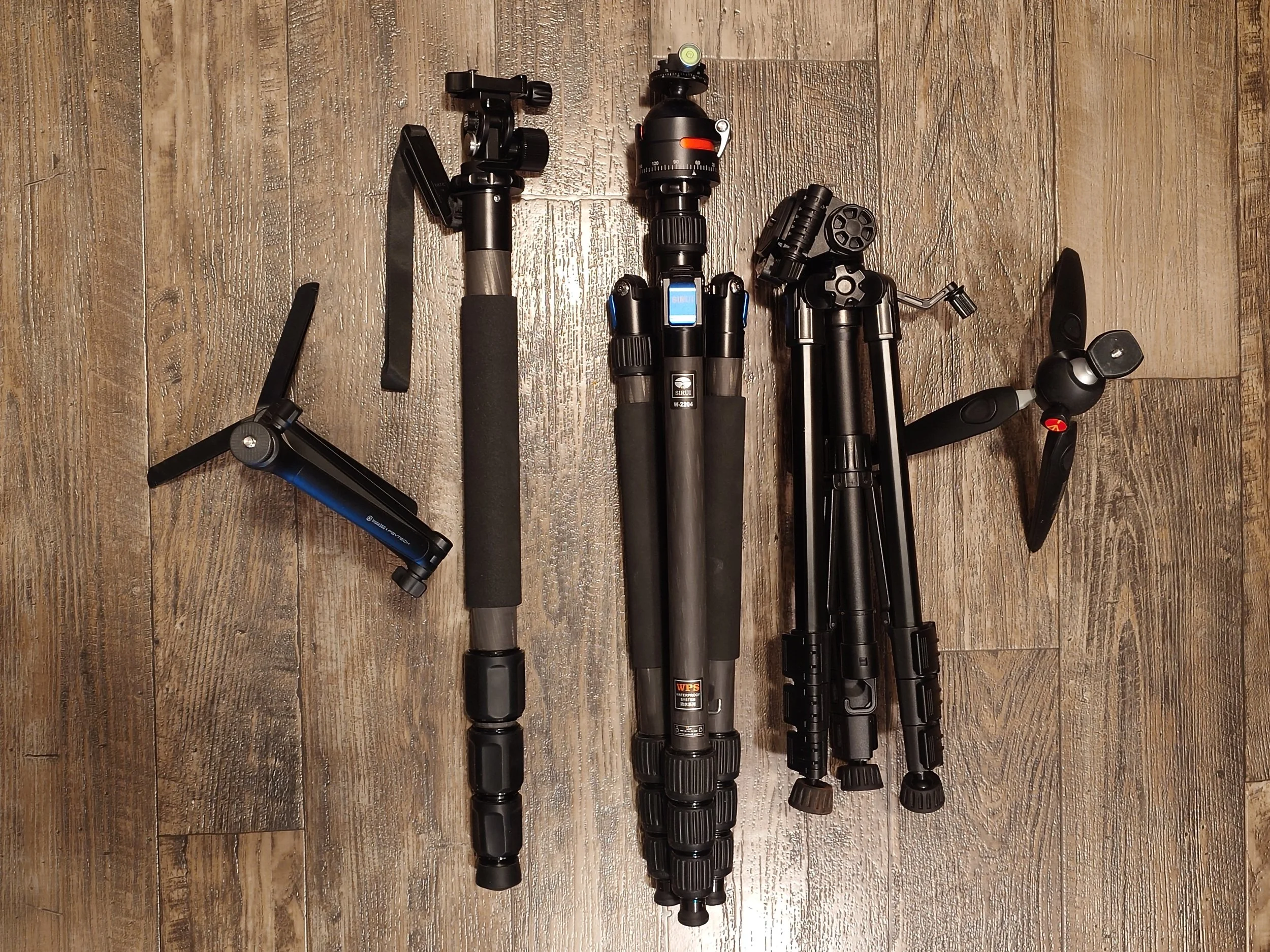
In the market for market for a new monopod or tripod?
Read on to discover some basic things you should consider when making your next purchase.
So, you’re looking for a new monopod or tripod. Perhaps possibly to replace or even update to a new model! You’ll find that the market is saturated with so many different kinds of monopods and tripods. I am certain you’ll find what you’re looking for, but don’t go into making your purchase blindly. Read on below as I breakdown the key factors one should consider when choosing their new tool.
Let’s us start with the big question. “Do you even need one?” If you’re new to photography don’t get talked into buying unnecessary gear, you won’t use from a salesperson. Make sure you actually need it to begin with. Many cameras and lenses are so technologically advanced now, that a person can get away with hand holding even at lower shutter speeds due to amazing stabilization. However, this doesn’t apply all niche usages.
Capacity! Cameras come in many different size factors due to different sensor sizes, and hence so do monopods and tripods. When choosing a monopod or tripod users should choose one that can properly support their cameras weight and additional attachments. Some folks overlook the additional weight added by clamps, heads, rails and additional brackets. All of this weight plus your cameras weight should be considered. You should also think of this as a long-term investment. Consider your future plans, do you plan to upgrade possibly to a larger heavier camera or lens in the future?
Next up let’s discuss height and positioning capabilities. This is sometimes looked over. Height is heavily dependent upon your niche. For example, a food photographer may choose to opt for a smaller adjustable tabletop tripod whilst a nature photographer may opt for a much taller monopod or tripod. When deciding you should consider the locking mechanisms of your tripod. Do you prefer lever locks or twist locks? I personally love twist locks. Make sure you choose what you feel most comfortable with. Now back to height adjustment features. Some tripods come with a center column while others don’t. I personally am not a fan of these as they can suffer from vibration if they are too long. Though this feature can be handy if you’re a macro shooter as some of these columns are reversible, not to mention most are completely removable allowing shooters to get very low. Which is also fantastic when shooting wildlife from low perspectives.
Let’s now examine the main materials that monopods and tripods are manufactured from. You have the following options: wood, aluminum and carbon fiber. Though wood is really not as popular as it once was, some still may choose it for a studio set-up or just for nostalgia. Aluminum tripods can be a heavier but are reliable and strong. While weaved carbon fiber is nearly as strong but lighter than aluminum. I personally choose carbon fiber products as they are more practical for my long hikes and usages. Aluminum tripods should be avoided if you plan to shoot seascapes, as sea spray and water are very corrosive. I also find carbon fiber far superior in extreme cold weather usage. Carbon fiber acts as a natural insulator, while aluminum absorbs heat quickly. Aluminum can really sting in extreme cold weather. If you do choose an aluminum monopod or tripod and you shoot in cold weather conditions, be sure to get some foam leg covers/sleeves for comfort and safer handling. One last thing to understand is that carbon fiber is generally more expensive than both wood and aluminum but offers lower weight and better portability.
Form factor, cost, it’s time to decide. Everything mentioned above should help you clarify exactly what tool best fits your needs. Remember what was mentioned above and consider the following. How compact do you need your equipment to be. Think about your travel habits, packing, airline regulations and vehicle size (storage area). Perhaps you can choose a hybrid tripod that has the capability of breaking down and being used additionally as a monopod. Decide on your budget and long-term usages. Maybe you can choose to save for a better purchase or be thrifty and wait for a big sale. I highly recommended researching and reading reviews before making a purchase hence giving you peace of mind.